The job interview. Just hearing the phrase can make even the most confident professional’s palms sweat. It’s a unique moment where your entire career history, your personality, and your future potential are condensed into a 30 to 60-minute conversation. But what if you could transform that anxiety into excitement, and that uncertainty into confident clarity? The difference between a nerve-wracking ordeal and a successful career launchpad almost always boils down to one thing: meticulous, structured preparation.
This isn’t about memorizing scripted answers. True interview preparation is a holistic process of research, self-reflection, and strategy. Drawing on best practices from leading career platforms like Indeed, the UK National Careers Service, and Prospects, this guide will walk you through a proven, step-by-step framework to not just attend an interview, but to truly own it.
Phase 1: Laying the Foundation – Research is Your Superpower
Walking into an interview without researching the company is like going into an exam without opening a textbook. It’s the single most impactful step you can take, and it immediately sets you apart from candidates who only talk about themselves.
- Deep-Dive into the Company: Go far beyond the “About Us” page. Understand their mission, values, recent news, financial performance (if public), and industry position. Read their annual reports, press releases, and LinkedIn updates. As the National Careers Service advises, this helps you answer the critical question: “Why do you want to work here?” with substance, not fluff.
- Decode the Job Description: This is your blueprint. Analyze the job description line by line. Highlight key skills, responsibilities, and “nice-to-have” qualifications. For each requirement, mentally prepare a concrete example from your past that proves you have it. This is the core of behavioural interview preparation.
- Understand the Culture: Use sites like Glassdoor to get a sense of the work environment. Look at employees’ profiles on LinkedIn. Are they formal or informal? Collaborative or independent? This informs how you present yourself—from your attire to the anecdotes you choose.
- Know Your Interviewers: If you have their names, look them up on LinkedIn. Understanding their career path and role can help you find common ground and tailor your points to their perspective.

Phase 2: Crafting Your Narrative – You Are the Solution
Companies hire people to solve problems. Your task is to craft a compelling narrative that positions you as the solution.
- The “So What?” Factor: For every achievement on your CV, be prepared to explain the impact. Don’t just say “managed a team.” Say, “Led a team of 5 to deliver Project X ahead of schedule, resulting in a 15% cost saving.” Use the STAR method (Situation, Task, Action, Result) to structure these stories. This technique, recommended by all three sources, ensures your answers are concise and evidence-based.
- Prepare Your “Toolkit” of Stories: Have 5-7 robust STAR stories ready that cover common competencies: leadership, problem-solving, overcoming failure, teamwork, and achieving a goal. These can be adapted to answer a wide variety of questions.
- Master the Two-Minute Pitch: The classic “Tell me about yourself” is your opening act. Prepare a crisp, engaging summary that connects your experience to your future potential at this specific company. It should last about 90-120 seconds and end with why you’re excited about this role.
- Anticipate Common (and Tough) Questions:
- “What is your greatest weakness?” Don’t give a cliché. Discuss a genuine area for improvement and, crucially, the steps you’re taking to address it.
- “Why are you leaving your current job?” Stay positive. Focus on seeking growth, new challenges, or aligning with your long-term career goals—never on bashing a former employer.
- “Where do you see yourself in 5 years?” Show ambition that aligns with the company’s trajectory, demonstrating you see a future with them.
Phase 3: The Practicalities – Logistical Excellence
Don’t let small oversights derail your big opportunity.
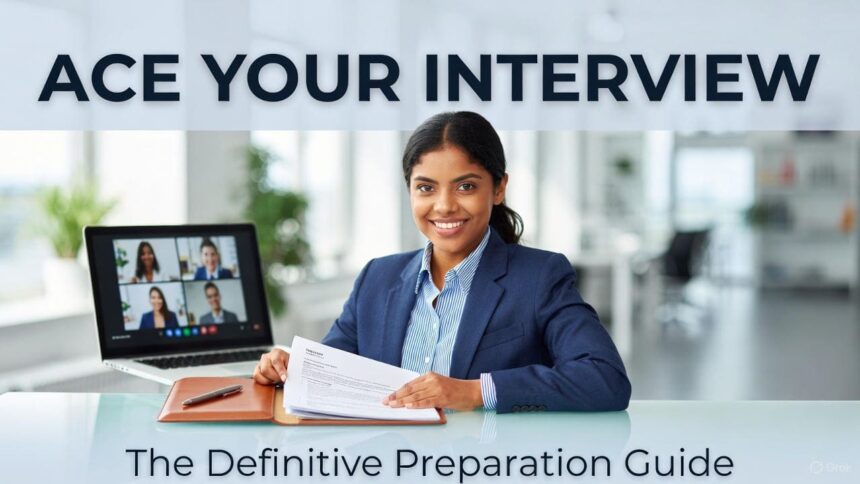
- Plan Your Journey: If it’s in-person, do a trial run. For a virtual interview, test your technology—camera, microphone, and platform (Zoom, Teams)—at least an hour before. Ensure a clean, professional, and quiet background with good lighting.
- Prepare Your Materials: Have multiple copies of your CV, a notepad, and a pen. Bring any relevant work samples or a portfolio. Charge your phone and laptop.
- Dress for Success: Professional attire is non-negotiable for an interview. When in doubt, it’s better to be slightly overdressed. Your appearance should convey respect for the opportunity.
Phase 4: The Day of the Interview – Mindset and Execution
This is it. Your preparation now turns into performance.
- The Hour Before: Review your notes, but don’t cram. Do a power pose, practice deep breathing, and visualize a successful conversation. Arrive 10-15 minutes early (virtually, log in 5 minutes early).
- During the Interview:
- First Impressions Matter: Offer a firm handshake (if appropriate), make eye contact, and smile. Your non-verbal communication—posture, nodding, and active listening—speaks volumes.
- Listen Actively: Answer the question asked, not the one you rehearsed. It’s okay to pause for a moment to think.
- Engage and Ask Insightful Questions: The interview is a two-way street. Preparing thoughtful questions to ask the interviewer shows genuine interest. Ask about team dynamics, key challenges for the role, the company’s strategy for the next year, or what success looks like in the first 6 months. Avoid questions about salary or benefits at this stage unless they bring it up.
- Handle Curveballs with Grace: For a difficult question, it’s fine to say, “That’s a great question. Let me think about that for a moment.” Use the structure you’ve practised to formulate a coherent response.
Phase 5: The Critical Follow-Up – Lasting Impressions
The interview isn’t over when you walk out the door.
- The Thank-You Email: Send a personalized post-interview thank-you email within 24 hours. Thank each interviewer by name, reiterate your specific interest in the role, and briefly mention one key point from your conversation that reinforced your fit. This is a powerful interview follow-up strategy that keeps you top of mind.
- Reflect and Refine: Regardless of the outcome, conduct a personal debrief. What went well? What questions stumped you? Use this to improve your interview skills development for next time.
Conclusion: Preparation is the Price of Admission
In today’s competitive job market, effective interview preparation is not an optional extra; it’s the essential price of admission. It transforms you from a hopeful candidate into a confident problem-solver. By investing the time to research deeply, craft your narrative, practise diligently, and execute professionally, you shift the dynamic. You’re no longer being interrogated; you’re engaging in a strategic conversation about how you can add value.
Remember, the goal is not to be perfect, but to be prepared, authentic, and engaged. You are not just answering questions, you are proving a case. Start building that case today, and walk into your next interview ready to claim the job you deserve.
Read more: SSC CGL Tier 1 Result 2025: A Comprehensive Guide for Qualified Candidates